



Alberto Nonnis
About
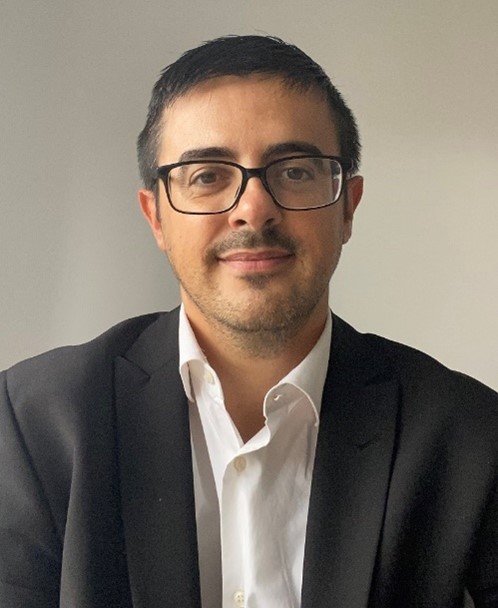
Alberto Nonnis is a lecturer and researcher at ESLSCA Business School Paris. He is also an associate researcher at Université Paris-Saclay and visiting scholar at Gakushuin University in Tokyo (Japan). He holds a PhD in Economics from the University of Cagliari (Italy). His research focuses on the economics of innovation, with a particular emphasis on the role of intangible capital and digital transformation in shaping economic and entrepreneurial dynamics—at macro, micro, and meso levels. His work has been published in leading international journals such as Research Policy, Telecommunications Policy, and Science and Public Policy.
Knowledge Areas
- Economics of innovation
- Intangible capital
- Digital economy
- Labor productivity
Academic Experience
- PhD in Economics – Università degli Studi di Cagliari
- Master of Science (MSc) in Financial Economics – University of Essex
Relevant Publications
Latest Publication:
Nonnis A, F Roth, A Bounfour (2025). Intangible Capital in France and Germany: Is there a Measurement Issue? ASTA Wirtschafts- und Sozialstatistisches Archiv https://link.springer.com/article/10.1007/s11943-025-00358-4
Major Publications (FNEGE / ABS Ranked):
Nonnis, A., Bounfour, A., & Kim, K. (2023). Knowledge spillovers and intangible complementarities: Empirical case of European countries. Research Policy, 52(1), 104611. https://doi.org/10.1016/j.respol.2022.104611 FNEGE: 1 | ABS: 4*
Kim, K., Bounfour, A., Nonnis, A., & Özaygen, A. (2021). Measuring ICT externalities and their contribution to productivity: A bilateral trade based approach. Telecommunications Policy, 45(2), 102085. https://doi.org/10.1016/j.telpol.2020.102085 FNEGE: 4 | ABS: 1
Kim, K., Nonnis, A., Özaygen, A., & Kogler, D. F. (2023). Green-tech firm creation in Germany: The role of regional knowledge. International Entrepreneurship and Management Journal, 19(1), 97–120. https://doi.org/10.1007/s11365-022-00808-3 FNEGE: 4 | ABS: 1
Beliaeva, T., Bounfour, A., & Nonnis, A. (2023). Modelling intangibles at the regional level in Europe: What lessons from a multidimensional approach? Knowledge Management Research & Practice, 21(3), 637–650. https://doi.org/10.1080/14778238.2021.1941359 FNEGE: 3 | ABS: 1
Nonnis, A., & Bounfour, A. (2025). Business agility, intangible capital and economic performance during the Covid-19 crisis. Science and Public Policy. Forthcoming. Accepted for publication. https://doi.org/10.1093/scipol/scaf043 ABS: 2
Policy contributions :
Nonnis, A., Roth, F., & Bounfour, A. (2025, 6 octobre). Intangible capital in France and Germany : Measurement issues and their impact on productivity. CEPR. https://cepr.org/voxeu/columns/intangible-capital-france-and-germany-measurement-issues-and-their-impact
Bounfour, A., Edamura, K., Ishikawa, T., Miyagawa, T., Nonnis, A., & Tonogi, K. (2025, 12 mars). New developments in total factor productivity measurement reflecting innovative activities : Evidence from the productivity J-curve in advanced countries. CEPR. https://cepr.org/voxeu/columns/new-developments-total-factor-productivity-measurement-reflecting-innovative
Full publication list:
Courses Taught
-
 Bachelor Finance Finance
The 3-year Bachelor of Finance offers an innovative, progressive pathway aimed at acquiring the fundamentals of business management, with a choice of two specialisations in the third year (market finance and corporate finance).
In the company, students will be required to work in interaction with other departments: marketing, human resources, purchasing, finance, accounting, international, communication, etc.
Our Bachelor's degree in Finance stands out for :
- Its specialisation programme in corporate finance or market finance. Over the three years, a student receives 315 hours of lectures in finance. Supplemented by related disciplines such as statistics, mathematics and financial mathematics (for a total of 168 hours), this represents 40% of the total volume.
- A skills-based teaching approach based on the Eslsca Learning System (ELS), using a skills framework that combines business skills, managerial skills, technical skills and interpersonal skills;
- Enhanced support at the start of the B1 course: two preparatory weeks to help students integrate and assert themselves so that they can approach higher education with motivation and confidence;
- A positive teaching approach: collective intelligence, theatre, exchange, cultural/managerial openness, community life, Fresque du climat, soft skills, etc. ;
- Its international dimension: hosting international students, the possibility of exchanges with partner universities in B2-S2, study trips to provide a cultural and intellectual insight into financial practices, etc. ;
- Its entrepreneurial dimension, thanks to the entrepreneurial pathway developed over the first two years:
Step 1 in Bachelor 1- First laboratory (from idea to project)
Step 2 in Bachelor 2 - Second laboratory (from project to company)
-
 MBA Market Finance Finance
The MBA Finance provides students with all the fundamental knowledge required in finance to prepare for a second-year specialization. Four tracks are available: Quantitative Trading, Financial Engineering, Sustainable Finance, or Audit and Management Control. This program is designed to train the next generation of financial managers.

